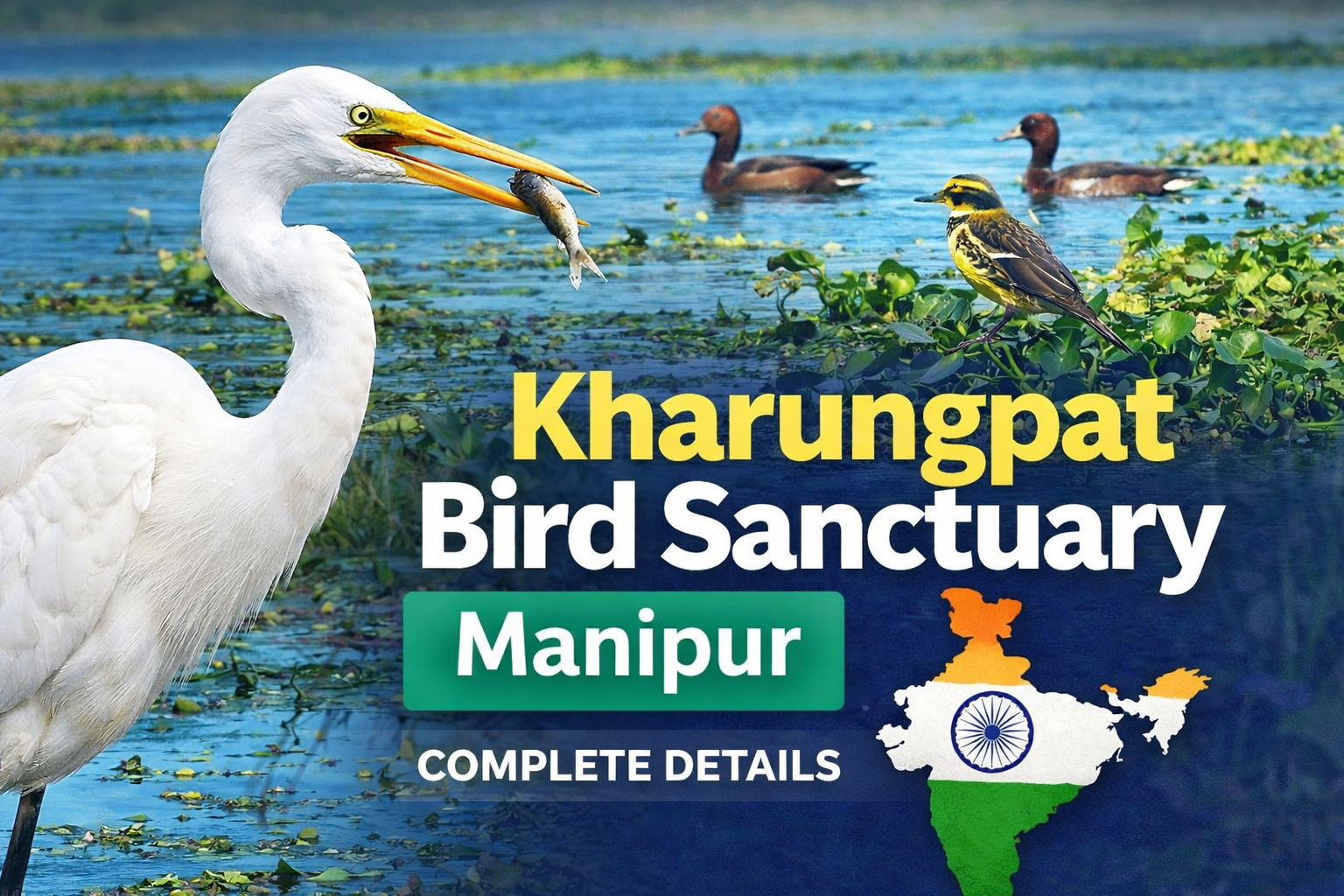
Kharungpat Bird Sanctuary, Manipur
The development of Kharungpat Bird Sanctuary in Kakching district of Manipur marks a significant step in India’s biodiversity conservation efforts. The Manipur government has officially moved to protect around 227 hectares of the Kharungpat wetland under the Wildlife Protection Act, 1972, aiming to preserve its rich ecosystem and migratory bird population.
Located in the central valley region near Imphal, Kharungpat wetland is part of the Manipur River basin and plays an essential role in maintaining ecological balance. It supports groundwater recharge, regulates the local climate, and provides a natural habitat for a wide variety of bird species. Due to its ecological importance and bird population, the site has the potential to qualify under Ramsar Convention criteria, making it globally significant.
The wetland has shown impressive bird diversity over the years. In 2023, around 69 species were recorded, while in 2024, approximately 67 species were observed. A large percentage of these are migratory birds that arrive through the Central Asian Flyway. Rare and endangered species such as the Yellow-Breasted Bunting and Ferruginous Pochard highlight the importance of this habitat at both national and international levels.
However, recent observations in 2025 have raised concerns due to a noticeable decline in bird numbers. This decline is mainly attributed to habitat degradation, water pollution, siltation, and increasing human activities such as fishing and agricultural encroachment. The loss of grasslands and natural roosting areas has further affected the ecosystem, making conservation efforts more urgent.
The ecological strength of Kharungpat also depends on its diverse aquatic vegetation and fish population. The wetland supports multiple plant species that provide food and shelter for birds, with Phragmites karka being the dominant vegetation. At the same time, invasive species like water hyacinth are creating challenges by reducing open water areas. The wetland also contains around 29 fish species, which play a vital role in maintaining the food chain and supporting bird life.
To ensure protection, the sanctuary will be governed under strict legal provisions of the Wildlife Protection Act, which prohibits hunting, encroachment, and unauthorized resource use. The government also plans to involve local communities through Eco-Development Committees (EDCs), promoting eco-tourism and sustainable livelihoods. Financial support has been allocated in the 2026–27 state budget, with a significant portion dedicated to environmental protection and habitat restoration.
you can read our detailed guide on National Parks of India.
Kharungpat is also being developed as a potential eco-tourism destination with bird-watching facilities, guided tours, and awareness programs. However, challenges such as invasive species, climate change, and human disturbance must be managed carefully to ensure long-term success.