
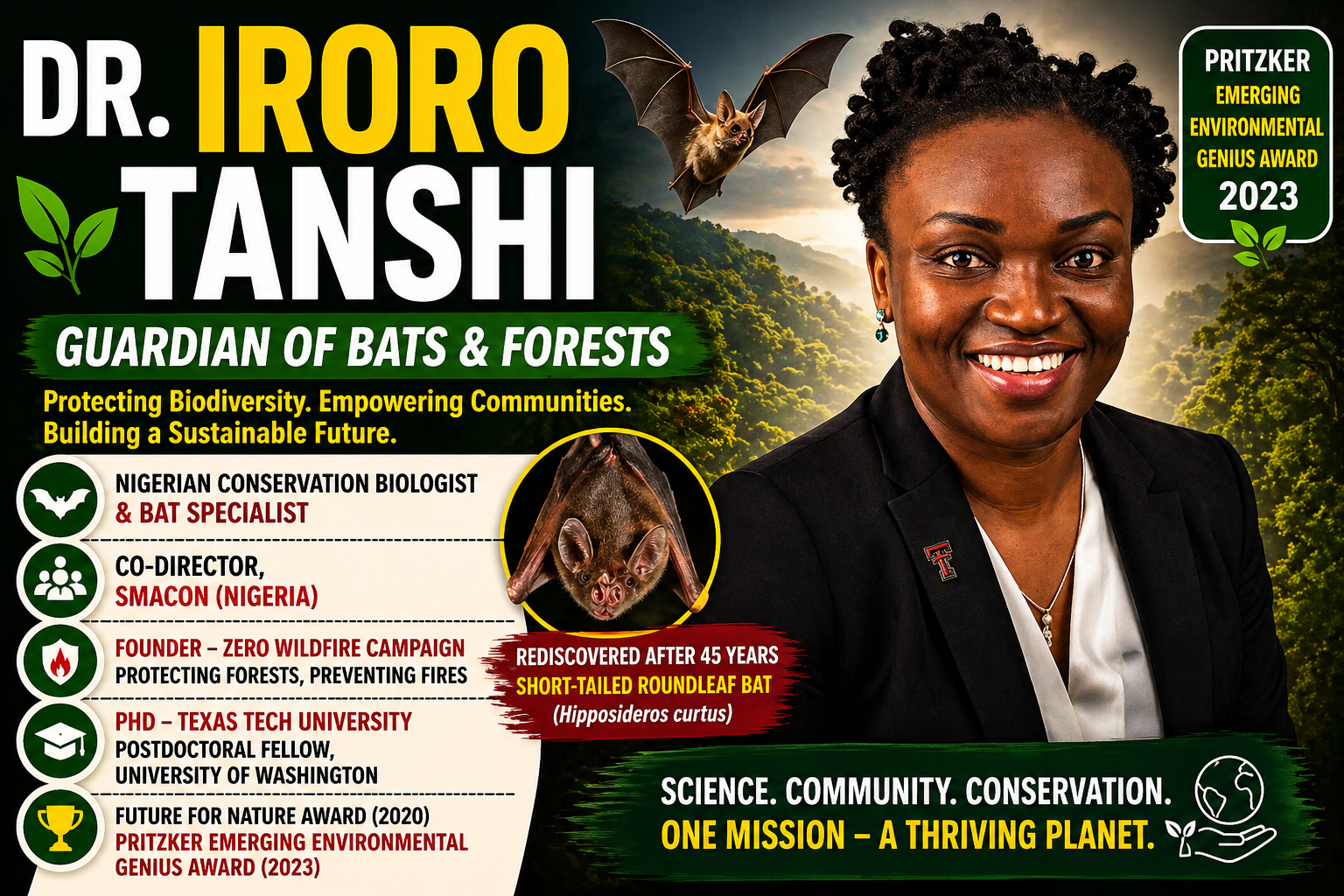
Dr. Iroro Tanshi is a leading Nigerian conservation biologist who specializes in bat ecology and forest conservation. She is widely recognized for her efforts to protect biodiversity in West Africa and for combining scientific research with community action.
She is the co-director of Small Mammal Conservation Organization (SMACON), where she leads several projects focused on protecting wildlife and preventing forest destruction.
Key Facts About Dr. Iroro Tanshi
- Field: Conservation biology and bat ecology
- Role: Co-director, SMACON (Nigeria)
- Academic Position: Postdoctoral Fellow at University of Washington
- Awards:Future for Nature Award (2020)
- Pritzker Emerging Environmental Genius Award (2023)
- Focus Areas: Bat conservation, wildfire prevention, forest ecology
Research and Scientific Contributions
Dr. Tanshi’s research focuses on understanding bat species and their role in ecosystems. Her work in the Gulf of Guinea forests has helped identify more than 100 bat species in Nigeria, making a significant contribution to biodiversity research.
One of her most important achievements is the rediscovery of the rare bat species Hipposideros curtus, which had not been seen for over 45 years. She is now actively working to protect this species and its habitat.
Her research combines:
- Biomechanics (how animals move and function)
- Sensory ecology (how animals interact with their environment)
- Landscape conservation
Community-Based Conservation (SMACON Initiative)
Through SMACON, Dr. Tanshi has introduced innovative programs that involve local communities in conservation.
Her Zero Wildfire Campaign aims to reduce forest fires during dry seasons by:
- Training local people
- Promoting sustainable practices
- Reducing harmful burning activities
This model ensures long-term success by linking conservation with community benefits.
Academic Background
Dr. Tanshi completed her Ph.D. at Texas Tech University, where she studied bat populations in Nigeria’s Afi Mountain Wildlife Sanctuary and Cross River National Park.
Currently, she is working at the University of Washington, researching how environmental and biological factors influence bat feeding behavior across different ecosystems.
Global Recognition and Impact
Dr. Iroro Tanshi is now recognized globally as an important voice in conservation science. Her work highlights the importance of combining research with real-world solutions.
Her contributions:
- Protect endangered species
- Reduce biodiversity loss
- Improve forest sustainability
- Support climate change mitigation
Dr. Iroro Tanshi’s work is transforming conservation in Africa. By combining science, innovation, and community involvement, she is creating long-lasting solutions to environmental challenges.
Her journey is an inspiration for future scientists and shows how local action can create global impact.
